
Universal Pipette Tips
Disposable pipette tips designed to fit single and multichannel pipettes from most manufacturers; offer acceptable performance compared to pipette specific tips and can be used with a variety of pipette models.
Single-use universal pipette tips are designed for compatibility with most mechanical and electronic single and multichannel pipettors.
Universal pipette tips are available in a range of types, sizes, colors, styles, and packaging configurations and may be designed for specific purposes or tasks.
- Capacity or volume based on the pipettor size
- Filters to reduce contamination and cross-contamination
- Color
- Sterility or autoclavability
- Tip style: beveled, tapered, wide bore, round, flat, or gel-loading
- Length: short or extended
- Purity: metal-free or DNase-, RNase-, ATP-, Bioburden-, PCR inhibitor-, endotoxin-, or pyrogen-free for genomic and biologic applications
- Surface treatments to reduce retention
- Packaging options to help facilitate re-stocking or eliminate waste

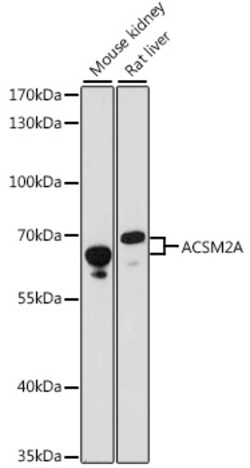
ABclonal Technology ACSM2A Rabbit pAb

This gene encodes a mitochondrial acyl-coenzyme A synthetase that is specific for medium chain fatty acids. These enzymes catalyze fatty acid activation, the first step of fatty acid metabolism, through the transfer of acyl-CoA. These enzymes also participate in the glycine conjugation pathway in the detoxification of xenobiotics such as benzoate and ibuprofen. Expression levels of this gene in the kidney may be correlated with kidney function. This gene and its paralog ACSM2B (Gene ID 348158), both present on chromosome 16, likely arose from a chromosomal duplication event.

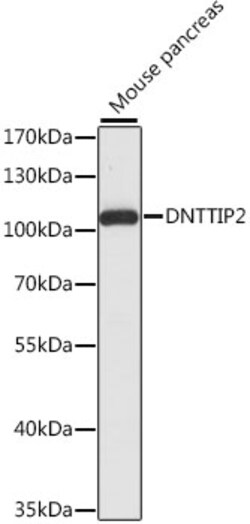
ABclonal Technology DNTTIP2 Rabbit pAb
This gene is thought to be involved in chromatin remodeling and gene transcription. The encoded nuclear protein binds to and enhances the transcriptional activity of the estrogen receptor alpha, and also interacts with terminal deoxynucleotidyltransferase. The expression profile of this gene is a potential biomarker for chronic obstructive pulmonary disease.
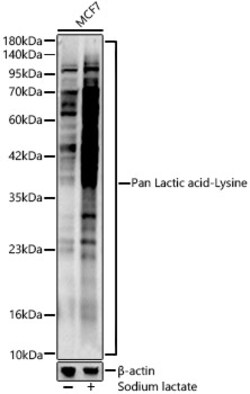
ABclonal Technology Pan Lactic acid-Lysine Rabbit pAb
Histone lysine lactation (Kla) is a newly discovered histone modification that regulates gene expression in macrophages. In M1 macrophages, lactic acid is derived from incompletely oxidized glucose and then produces lactyl-CoA, which is transferred via acetyltransferase p300 to the lysine tail of the histone. This modification is abundant in gene promoter regions that lack acetylation and are associated with gene expression activation.
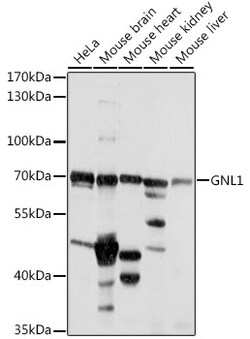
ABclonal Technology GNL1 Rabbit pAb
The GNL1 gene, identified in the human major histocompatibility complex class I region, shows a high degree of similarity with its mouse counterpart. The GNL1 gene is located less than 2 kb centromeric to HLA-E, in the same transcriptional orientation. GNL1 is telomeric to HLA-B and HLA-C.
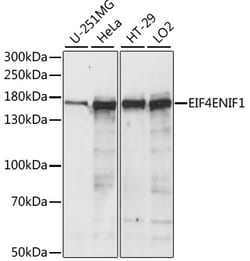
ABclonal Technology EIF4ENIF1 Rabbit pAb
The protein encoded by this gene is a nucleocytoplasmic shuttle protein for the translation initiation factor eIF4E. This shuttle protein interacts with the importin alpha-beta complex to mediate nuclear import of eIF4E. It is predominantly cytoplasmic, its own nuclear import is regulated by a nuclear localization signal and nuclear export signals. Multiple transcript variants encoding different isoforms have been found for this gene.

ABclonal Technology CSK Rabbit pAb
The protein encoded by this gene is involved in multiple pathways, including the regulation of Src family kinases. It plays an important role in T-cell activation through its association with the protein encoded by the protein tyrosine phosphatase, non-receptor type 22 (PTPN22) gene. This protein also phosphorylates C-terminal tyrosine residues on multiple substrates, including the protein encoded by the SRC proto-oncogene, non-receptor tyrosine kinase gene. Phosphorylation suppresses the kinase activity of the Src family tyrosine kinases. An intronic polymorphism (rs34933034) in this gene has been found to affect B-cell activation and is associated with systemic lupus erythematosus (SLE). Alternative splicing results in multiple transcript variants.
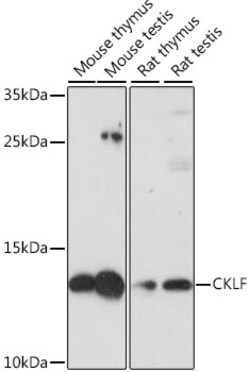
ABclonal Technology CKLF Rabbit pAb
The product of this gene is a cytokine. Cytokines are small proteins that have an essential role in the immune and inflammatory responses. This gene is one of several chemokine-like factor genes located in a cluster on chromosome 16. The protein encoded by this gene is a potent chemoattractant for neutrophils, monocytes and lymphocytes. It also can stimulate the proliferation of skeletal muscle cells. This protein may play important roles in inflammation and in the regeneration of skeletal muscle. Alternatively spliced transcript variants encoding different isoforms have been identified. Naturally occurring read-through transcription occurs between this locus and the neighboring locus CMTM1 (CKLF-like MARVEL transmembrane domain containing 1).

ABclonal Technology DOK4 Rabbit pAb
Predicted to be involved in positive regulation of MAPK cascade and transmembrane receptor protein tyrosine kinase signaling pathway. Predicted to act upstream of or within nervous system development. Predicted to be located in cytosol. Predicted to be active in cytoplasm.
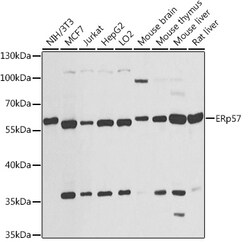
ABclonal Technology ERp57 Rabbit pAb
This gene encodes a protein of the endoplasmic reticulum that interacts with lectin chaperones calreticulin and calnexin to modulate folding of newly synthesized glycoproteins. The protein was once thought to be a phospholipase, however, it has been demonstrated that the protein actually has protein disulfide isomerase activity. It is thought that complexes of lectins and this protein mediate protein folding by promoting formation of disulfide bonds in their glycoprotein substrates. This protein also functions as a molecular chaperone that prevents the formation of protein aggregates.
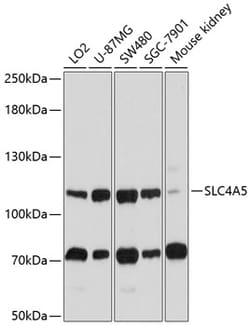
ABclonal Technology SLC4A5 Rabbit pAb
This gene encodes a member of the sodium bicarbonate cotransporter (NBC) family, part of the bicarbonate transporter superfamily. Sodium bicarbonate cotransporters are involved in intracellular pH regulation and electroneural or electrogenic sodium bicarbonate transport. This protein is thought to be an integral membrane protein. Multiple transcript variants encoding different isoforms have been found for this gene, but the biological validity of some variants has not been determined.
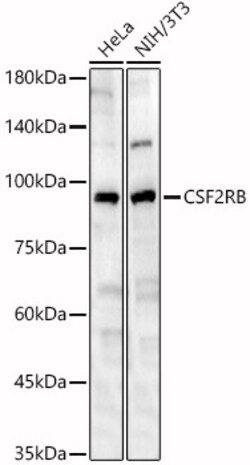
ABclonal Technology CSF2RB Rabbit pAb
The protein encoded by this gene is the common beta chain of the high affinity receptor for IL-3, IL-5 and CSF. Defects in this gene have been reported to be associated with protein alveolar proteinosis (PAP).
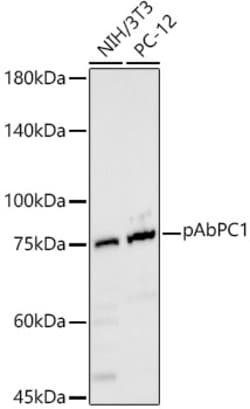
ABclonal Technology pAbPC1 Rabbit pAb
This gene encodes a poly(A) binding protein. The protein shuttles between the nucleus and cytoplasm and binds to the 3 poly(A) tail of eukaryotic messenger RNAs via RNA-recognition motifs. The binding of this protein to poly(A) promotes ribosome recruitment and translation initiation, it is also required for poly(A) shortening which is the first step in mRNA decay. The gene is part of a small gene family including three protein-coding genes and several pseudogenes.
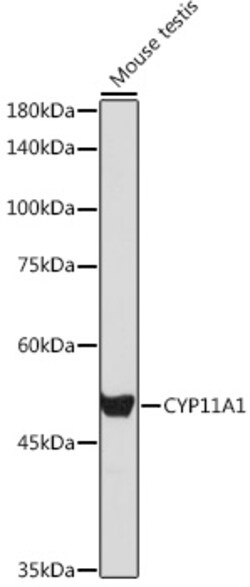
ABclonal Technology CYP11A1 Rabbit pAb
This gene encodes a member of the cytochrome P450 superfamily of enzymes. The cytochrome P450 proteins are monooxygenases which catalyze many reactions involved in drug metabolism and synthesis of cholesterol, steroids and other lipids. This protein localizes to the mitochondrial inner membrane and catalyzes the conversion of cholesterol to pregnenolone, the first and rate-limiting step in the synthesis of the steroid hormones. Two transcript variants encoding different isoforms have been found for this gene. The cellular location of the smaller isoform is unclear since it lacks the mitochondrial-targeting transit peptide.
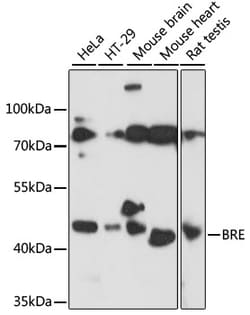
ABclonal Technology BRE Rabbit pAb
This gene encodes an anti-apoptotic, death receptor-associated protein that interacts with tumor necrosis factor-receptor-1. The encoded protein acts as an adapter in several protein complexes, including the BRCA1-A complex and the BRISC complex. The BRCA1-A complex possesses ubiquitinase activity and targets sites of double strand DNA breaks, while the BRISC complex exhibits deubiquitinase activity and is involved in mitotic spindle assembly. This gene is upregulated in several types of cancer.
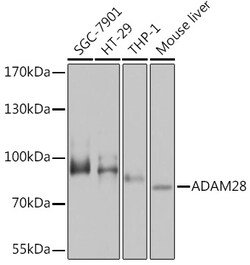
ABclonal Technology ADAM28 Rabbit pAb
This gene encodes a member of the ADAM (a disintegrin and metalloprotease domain) family. Members of this family are membrane-anchored proteins structurally related to snake venom disintegrins, and have been implicated in a variety of biological processes involving cell-cell and cell-matrix interactions, including fertilization, muscle development, and neurogenesis. The protein encoded by this gene is a lymphocyte-expressed ADAM protein. This gene is present in a gene cluster with other members of the ADAM family on chromosome 8. Alternative splicing results in multiple transcript variants.